Introduction
Imagine this, You’re watching your favorite animated movie. Suddenly, a character speaks in your own language even though the movie was originally made across the world. Magic, right?
Well, that magic isn’t just for blockbuster films anymore. Thanks to AI, dubbing is no longer slow, expensive, or limited to big studios. Now, creators of all sizes, YouTubers, marketers, educators, and hobbyists can bring their content to global audiences in multiple languages almost instantly.
But here’s the catch, traditional dubbing has always been a pain. It’s expensive, takes weeks, and you need a team of voice actors, editors, and sound engineers. For most creators, that just wasn’t possible.
Enter AI. Artificial intelligence is changing the game completely. It’s making dubbing faster, cheaper, and surprisingly realistic. Today, we’re going to dive deep into how AI is revolutionizing dubbing, why it matters for creators, and how you can leverage it yourself.
Why AI Is a Game-Changer in Dubbing
AI isn’t just a fancy tool, it’s transforming the way content is created, shared and experienced. Let’s break down why it matters.
1. Lightning-Fast Turnaround
One of the biggest headaches with traditional dubbing? Waiting.
- Voice actors spend hours recording each line.
- Editors spend days syncing voices to the actors’ lips.
- And studios spend weeks just to get one episode ready.
With AI, the same task can be done in minutes. You type the script, choose a voice, and voila your content is ready in multiple languages. No waiting. No back-and-forth.
2. Lower Costs
Traditional dubbing can cost thousands of dollars for just one episode or video. AI changes that equation completely.
- You don’t need dozens of voice actors.
- No expensive studio time.
- AI software is usually subscription-based or pay-per-use, which is way cheaper than hiring a full dubbing team.
For small creators or startups, this means reaching a global audience without breaking the bank.
3. Natural-Sounding Voices
Early AI voices sounded robotic and unnatural. But modern AI has come a long way.
- Voices can now express emotions, joy, sadness, anger, excitement.
- Pronunciation is clear, even in multiple languages.
- You can tweak pitch, speed, and tone to match the character or style you want.
It’s not perfect for Hollywood-level productions yet, but for most online videos, it’s more than enough to make viewers feel immersed.
4. Global Reach
Here’s where AI really shines: breaking language barriers.
- One video, hundreds of languages.
- Your content can reach people who would never have understood it otherwise.
- It opens doors to new markets, subscribers, or customers you didn’t even think about before.
For creators, this is huge. Suddenly, a video made in your living room can reach someone in Tokyo, Paris, or Rio de Janeiro without ever hiring a single voice actor.
How AI Dubbing Actually Works
You might be thinking, “ AI can do all this, but how does it actually work?” Don’t worry, we’re going to break it down step by step in a way that’s easy to understand. Even if you’ve never touched a dubbing tool before, by the end of this, it’ll make complete sense.
Step 1: Voice Cloning
The first step is voice cloning, which is exactly what it sounds like—AI can create a digital copy of a human voice. All it needs is a few minutes of audio to “learn” the voice’s tone, pitch, and style.
This means you can:
- Use a virtual version of your own voice for multiple videos without re-recording every time.
- Clone voices you’re allowed to use, giving your content a consistent style.
- Quickly switch between different voices depending on the scene or character.
It’s like having your own personal voice actor who never sleeps and can speak any language.
Step 2: Text-to-Speech (TTS)
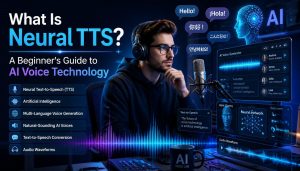
Next comes Text-to-Speech, or TTS. Once your script is ready, AI converts it into speech that sounds natural, no recording booth needed.
Here’s what makes this step so powerful:
- You don’t need to spend hours recording lines yourself.
- The AI can instantly generate multiple language versions from the same script.
- You can tweak pronunciation, speed, and tone without asking a human actor to redo a line.
Basically, you type, click, and listen. The software handles the rest.
Step 3: Lip Sync & Timing
A big challenge in traditional dubbing is syncing the voice to the actor’s lip movements. Mismatched audio can feel awkward and take the audience out of the story.
AI solves this with lip sync and timing algorithms:
- It analyzes the original video and matches the dubbed voice to the actor’s mouth movements.
- Pauses, pacing, and timing are adjusted automatically.
- The result? The voice looks like it’s naturally coming from the character, even if it’s in a different language.
This is a huge time saver because editors no longer have to manually align every line of dialogue.
Step 4: Emotion Modeling
Finally, there’s emotion modeling, the step that makes AI dubbing truly feel alive. Modern AI doesn’t just read words; it conveys feelings.
- AI can adjust tone, pitch, and speed to match the scene’s mood.
- Happy, sad, excited, angry, dramatic, you name it.
- Some advanced tools even analyze the context of the scene to make subtle adjustments, like pausing for comedic timing or emphasizing key words for dramatic effect.
This makes the dubbing feel human and expressive, not robotic or flat. Viewers get the same emotional impact as the original performance, even in a different language.
Step 5: Fine-Tuning and Editing
While AI does most of the heavy lifting, you still have the option to fine-tune:
- Adjust specific lines for clarity or style.
- Change the voice or accent for a character.
- Add background effects or music to match the scene perfectly.
It’s like having a professional dubbing studio in your laptop, but without all the expensive equipment or long recording sessions.
AI dubbing works by combining these steps into a seamless process: voice cloning, text-to-speech, lip sync, and emotion modeling, all with optional fine-tuning. The result is a high-quality, multilingual version of your content that’s ready to share with the world faster, cheaper, and more scalable than traditional methods ever could be.
A Simple Reality Check (PAS Framework)
Problem:
You want your content to reach people all over the world, but traditional dubbing is expensive, slow, and limited to a few languages.
Agitation:
Without dubbing, millions of potential viewers can’t understand your content. You lose subscribers, engagement, and growth. Plus, the costs and time required make global reach feel impossible.
Solution
AI dubbing fixes all of this. You can produce multiple language versions in minutes, at a fraction of the cost, with realistic, human-like voices. One video suddenly reaches a global audience, without the old hurdles.
AI Dubbing vs Traditional Dubbing
| Feature | Traditional Dubbing | AI Dubbing |
| Time Required | Weeks | Minutes |
| Cost | High | Low |
| Languages Supported | Limited | Multiple, instantly |
| Voice Quality | Human but limited | Human-like, expressive |
| Flexibility | Hard to adjust | Easy to edit and update |
| Scalability | Low | High |
Benefits of AI Dubbing for Creators
- Reach More People: Multi-language content opens doors to global audiences.
- Save Money: Reduce production costs drastically.
- Speed Up Production: Publish videos faster and more often.
- Consistent Quality: No more worrying about different actors or recordings.
- Experiment Freely: Try new voices, languages, and styles without extra expense.
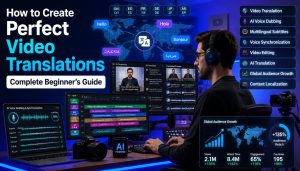
Imagine uploading a video in English and instantly having Spanish, Japanese, and French versions ready to go. That’s the kind of power AI gives you.
FAQs About AI Dubbing
1. What is AI dubbing?
AI dubbing is the use of artificial intelligence to create voiceovers for videos automatically. Instead of recording voices manually, you simply provide a script, and the AI turns it into natural-sounding speech. It can do this in multiple languages, helping your content reach a much wider audience without extra effort or cost.2. Is AI dubbing as good as human dubbing?
In many cases, yes especially for online content like YouTube videos, courses, or ads. Modern AI voices sound very natural and can express emotions quite well. While high-end movies may still rely on human actors for deeper performances, most viewers won’t even notice the difference in everyday content.3. Can AI mimic real voices?
Yes, it can. This is called voice cloning. With just a few minutes of audio, AI can learn how a person speaks their tone, pitch, and style and create a digital version of their voice. This is useful if you want consistency across different videos or languages.4. How fast is AI dubbing?
This is one of its biggest advantages. What used to take days or even weeks with traditional dubbing can now be done in minutes. You can generate voiceovers almost instantly, make edits quickly, and re-export without delays.5. Is AI dubbing expensive?
Not really. Compared to traditional dubbing, it’s much more affordable. Most AI tools work on a subscription or pay-per-use model, which makes them accessible even for beginners or small creators. You don’t need to hire voice actors or rent studios, which saves a lot of money.6. Can AI handle multiple languages?
Yes, and this is where AI really stands out. You can create dubbed versions of your content in dozens of languages, sometimes with just a few clicks. This makes it easy to connect with audiences around the world without creating separate content from scratch.7. Does AI preserve emotions?
Yes, modern AI is designed to do more than just read text. It can adjust tone, speed, and emphasis to match the emotion of the scene whether it’s excitement, sadness, anger, or calm narration. This makes the final output feel more natural and engaging.8. Can I use AI dubbing for commercial projects?
Absolutely. Many businesses, marketers, and content creators already use AI dubbing for ads, courses, social media videos, and more. Just make sure you’re using voices and content in a way that follows the platform’s rules and permissions.9. Will AI replace human voice actors?
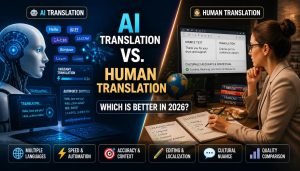
Not completely. Human voice actors are still important, especially for projects that require deep emotion, creativity, or unique performances. However, AI can handle a large portion of everyday dubbing tasks quickly and efficiently. Think of it as a tool, not a replacement.10. Is AI dubbing easy to use?
Yes, most tools are built with beginners in mind. You don’t need technical skills or prior experience. If you can type a script and click a few buttons, you can create a dubbed video. Over time, you can learn advanced features, but getting started is very simple.11. Can I edit the voice after generating it?
Yes, and this is one of the biggest advantages. If something doesn’t sound right, you can easily adjust the text, change the tone, or select a different voice without re-recording everything. This flexibility saves both time and effort.12. Is AI dubbing the future?
It’s already becoming a big part of content creation. As technology improves, AI dubbing will become even more realistic, faster, and easier to use. For creators who want to grow globally, it’s quickly turning into a must-have tool rather than just an option.How Creators Can Start Using AI Dubbing
- Choose the Right Tool: There are free trials and subscription options. Start small.
- Prepare Your Script: Make sure it’s clean and ready for translation.
- Select Voices: Pick the voice style, tone, and language.
- Generate Voiceover: Let AI do the heavy lifting.
- Check & Adjust: Listen, tweak, and fine-tune.
- Publish: Share your multi-language video with your global audience.
Even if you’re a beginner, you can create professional-level dubbing without a studio or actors.
Conclusion:
AI is not just improving dubbing, it’s changing the entire game. For creators, marketers, and anyone making videos, AI dubbing makes it possible to reach global audiences faster, cheaper, and easier than ever before. No more waiting weeks for voice actors. No more high costs. No more being stuck in one language. AI makes multi-language content realistic, practical, and scalable.
So if you want your content to reach the world, now’s the time to start. Test an AI dubbing tool. Try a small video. Play with voices. And watch your content go global without the old barriers.
Take Action Today:
Pick a tool, prepare your script, generate your first AI dub, and experience firsthand how AI is revolutionizing dubbing. Once you start, you’ll wonder why you ever struggled with traditional methods. The future of dubbing is here and it’s faster, cheaper, and smarter than ever.