Introduction
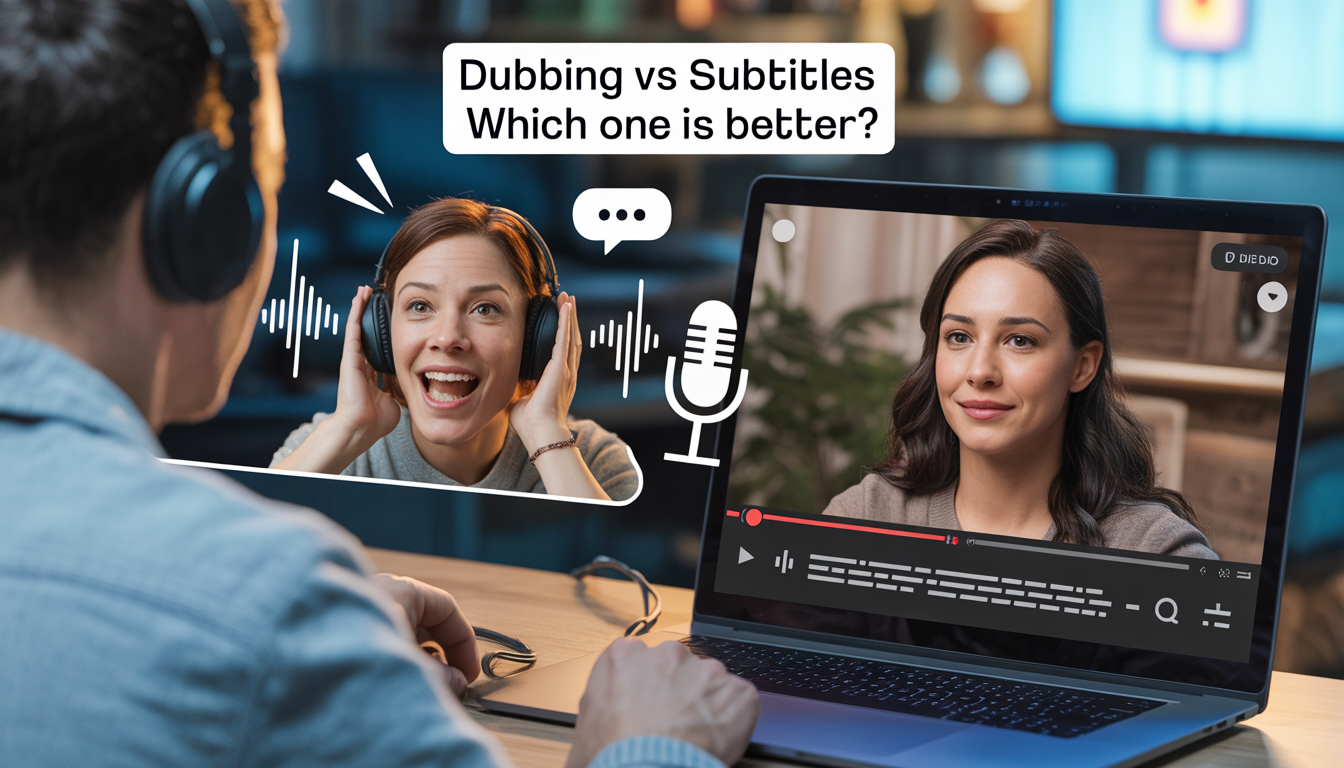
Have you ever watched a video in another language and felt confused for a second then quickly wondered: “Should I just read subtitles, or would dubbed audio be better?”
This is something almost every viewer and content creator faces today. As videos go global, language is no longer a small issue, it’s a big factor that decides whether people stay or leave your content. That’s why creators mainly rely on two solutions: dubbing and subtitles.
Both are everywhere on YouTube, Netflix, online courses, and social media. And both try to solve the same problem, helping people understand content in different languages.
Both dubbing and subtitles have their own advantages, and both can work really well depending on the situation.
Sometimes subtitles are perfect for quick understanding. Other times, dubbing creates a more natural and immersive experience.
It really depends on:
In this guide, we’ll break everything down in a simple, practical way so you can clearly understand the difference and confidently choose what works best for your videos.
Dubbing means replacing the original voice in a video with a new voice in another language. Instead of listening to the original speaker, the viewer hears a translated voice that matches their own language. This makes the content easier to understand without needing to read anything on screen. In simple words, dubbing turns a foreign-language video into a fully localized viewing experience, where the audience can focus on visuals and story while listening comfortably in their own language.
This technique is widely used in films, YouTube videos, online courses, and marketing content because it helps break language barriers and makes content accessible to a much wider audience.
Subtitles are text versions of spoken dialogue that appear at the bottom of a video screen while the original audio continues to play. Instead of replacing the voice, subtitles show the translation or transcript of what is being said in written form. This allows viewers to read along while watching the video, making it easier to understand content in different languages or in noisy environments where audio might be hard to hear.
Subtitles are widely used on platforms like YouTube, Netflix, online courses, and social media because they are simple, flexible, and work with almost any type of video content.
Many creators today want to reach a global audience, but they face a simple yet powerful barrier language. No matter how good the content is, if viewers cannot understand it, the message gets lost. This becomes a major challenge for YouTubers, educators, and marketers trying to grow internationally.
Even high-quality videos struggle to perform well when they are limited to just one language.
Now think about what happens from the viewer’s side.
When people can’t fully understand a video, they usually:
And this creates a bigger problem for creators. Even valuable content gets ignored. Watch time drops. Engagement falls. And overall channel or brand growth becomes slower than expected. In many cases, it’s not the content that’s weak, it’s just the language barrier blocking communication.
The good news is that this problem has a simple fix: localization using dubbing and subtitles. Both methods help you make content understandable for different audiences, but in slightly different ways:
The smartest approach is often to use both together, so viewers can either listen or read depending on their preference. This combination improves understanding, increases engagement, and helps your content reach a much wider global audience.
Dubbing is not always necessary for every video, but in some situations, it can significantly improve the viewer experience. It works best when you want your content to feel smooth, natural, and easy to follow without forcing viewers to read text.
Use dubbing if:
In simple terms, dubbing is best when quality and experience matter more than speed or cost.
Subtitles are a practical and flexible solution, especially when you want to move fast or keep production costs low. They are widely used in social media content and online platforms because they are easy to create and accessible to almost everyone.
Use subtitles if:
In short, subtitles are best when you need a quick, cost-effective, and widely compatible solution.
Many successful creators use a hybrid approach:
This gives the best of both worlds better reach and better understanding.
Dubbing and subtitles both help you reach more people but in different ways.
If you want a natural, immersive experience, go with dubbing.
If you want a fast and affordable solution, subtitles are perfect.
But if you really want the best results, combine both.
Start small. Add subtitles to your next video. Then try dubbing one video and compare the results.
Once you see the difference, you’ll understand how powerful multilingual content can be for growing your audience worldwide.
Have you ever watched a video in another language and felt confused for a second then quickly wondered: “Should I just read subtitles, or would dubbed audio be better?”
This is something almost every viewer and content creator faces today. As videos go global, language is no longer a small issue, it’s a big factor that decides whether people stay or leave your content. That’s why creators mainly rely on two solutions: dubbing and subtitles.
Both are everywhere on YouTube, Netflix, online courses, and social media. And both try to solve the same problem, helping people understand content in different languages.
Both dubbing and subtitles have their own advantages, and both can work really well depending on the situation.
Sometimes subtitles are perfect for quick understanding. Other times, dubbing creates a more natural and immersive experience.
It really depends on:
- Your audience
- Your content style
- Your budget and time
- And the experience you want to create
In this guide, we’ll break everything down in a simple, practical way so you can clearly understand the difference and confidently choose what works best for your videos.
What Is Dubbing?
Dubbing means replacing the original voice in a video with a new voice in another language. Instead of listening to the original speaker, the viewer hears a translated voice that matches their own language. This makes the content easier to understand without needing to read anything on screen. In simple words, dubbing turns a foreign-language video into a fully localized viewing experience, where the audience can focus on visuals and story while listening comfortably in their own language.
This technique is widely used in films, YouTube videos, online courses, and marketing content because it helps break language barriers and makes content accessible to a much wider audience.
Why dubbing is popular:
- Feels more natural and immersive Viewers can focus on watching instead of reading subtitles, which creates a smoother experience.
- Easier for viewers who don’t like reading Many people prefer listening over reading, especially on mobile devices.
- Works well for storytelling and education It helps explain ideas clearly while keeping attention on visuals.
- Increases watch time in many cases When viewers understand everything easily, they are more likely to keep watching till the end.
What Are Subtitles?
Subtitles are text versions of spoken dialogue that appear at the bottom of a video screen while the original audio continues to play. Instead of replacing the voice, subtitles show the translation or transcript of what is being said in written form. This allows viewers to read along while watching the video, making it easier to understand content in different languages or in noisy environments where audio might be hard to hear.
Subtitles are widely used on platforms like YouTube, Netflix, online courses, and social media because they are simple, flexible, and work with almost any type of video content.
Why subtitles are popular:
- Fast and cheap to create Subtitles are much quicker and more affordable compared to dubbing, making them ideal for beginners and large-scale content.
- Keeps original voice and emotion Since the original audio stays unchanged, viewers can still hear the real tone, emotion, and style of the speaker.
- Great for learning languages Many people use subtitles to improve their language skills by reading and listening at the same time.
- Easy to add to any video Most video editing tools and platforms allow quick subtitle integration without advanced editing knowledge.
Dubbing vs Subtitles (Simple Comparison Table)
| Feature | Dubbing 🎤 | Subtitles 📝 |
| Experience | More immersive | Requires reading |
| Cost | Higher | Lower |
| Engagement | Higher (in most cases) | Medium |
| Production Time | Longer | Faster |
| Best For | E-learning, films | Social media, tutorials |
PAS Framework: The Real Problem Creators Face
Problem
Many creators today want to reach a global audience, but they face a simple yet powerful barrier language. No matter how good the content is, if viewers cannot understand it, the message gets lost. This becomes a major challenge for YouTubers, educators, and marketers trying to grow internationally.
Even high-quality videos struggle to perform well when they are limited to just one language.
Agitation
Now think about what happens from the viewer’s side.
When people can’t fully understand a video, they usually:
- Lose interest within a few seconds
- Struggle to follow the message or explanation
- Or simply skip the video and move on
And this creates a bigger problem for creators. Even valuable content gets ignored. Watch time drops. Engagement falls. And overall channel or brand growth becomes slower than expected. In many cases, it’s not the content that’s weak, it’s just the language barrier blocking communication.
Solution
The good news is that this problem has a simple fix: localization using dubbing and subtitles. Both methods help you make content understandable for different audiences, but in slightly different ways:
- Dubbing makes the experience smooth and natural by letting viewers listen in their own language.
- Subtitles make content accessible quickly and at a low cost while keeping the original voice intact.
The smartest approach is often to use both together, so viewers can either listen or read depending on their preference. This combination improves understanding, increases engagement, and helps your content reach a much wider global audience.
When Should You Use Dubbing?
Dubbing is not always necessary for every video, but in some situations, it can significantly improve the viewer experience. It works best when you want your content to feel smooth, natural, and easy to follow without forcing viewers to read text.
Use dubbing if:
- You want a professional video feel Dubbing gives your content a polished and high-quality presentation, similar to movies or professional training videos.
- Your audience prefers listening over reading Many viewers find it easier to listen rather than read subtitles, especially on mobile devices.
- You are creating e-learning or storytelling content Educational videos, courses, and stories become more engaging when explained through voice.
- You want higher engagement When viewers fully understand the audio in their own language, they are more likely to watch longer and stay focused.
In simple terms, dubbing is best when quality and experience matter more than speed or cost.
When Should You Use Subtitles?
Subtitles are a practical and flexible solution, especially when you want to move fast or keep production costs low. They are widely used in social media content and online platforms because they are easy to create and accessible to almost everyone.
Use subtitles if:
- You want fast content creation Subtitles can be generated and added quickly without much editing work.
- Your budget is low They are more affordable compared to full dubbing, making them ideal for beginners.
- You are posting on social media Platforms like YouTube Shorts, Instagram Reels, and TikTok often rely on subtitles for quick understanding.
- You want to support silent viewing Many users watch videos without sound, especially in public places, so subtitles help them follow along easily.
In short, subtitles are best when you need a quick, cost-effective, and widely compatible solution.
Best Strategy
Many successful creators use a hybrid approach:
- Dubbing for main audio
- Subtitles for extra clarity
This gives the best of both worlds better reach and better understanding.
FAQs (Frequently Asked Questions)
1. What is dubbing in simple words?
Dubbing is the process of replacing the original voice in a video with a translated voice in another language. It allows viewers to understand the content by listening instead of reading.2. What are subtitles?
Subtitles are written text translations shown on the screen while the original audio plays. They help viewers understand what is being said without changing the voice.3. Which is better, dubbing or subtitles?
It depends on your goal and audience. Dubbing is more engaging and immersive, while subtitles are faster, cheaper, and easier to produce. Both have their own strengths.4. Is dubbing expensive?
Yes, traditional dubbing can be more expensive because it may require voice artists, recording setups, and editing. However, AI dubbing tools are making it much more affordable today.5. Are subtitles enough for YouTube videos?
Yes, subtitles are often enough for many YouTube creators. They improve accessibility, help with SEO, and make videos easier to understand for a wider audience.6. Does dubbing increase watch time?
In many cases, yes. When viewers can understand the content in their own language, they are more likely to stay longer and watch the full video.7. Are subtitles good for SEO?
Yes, subtitles improve accessibility and help search engines better understand your content. This can indirectly improve visibility and reach.8. Can I use both dubbing and subtitles?
Yes, and this is often the best strategy for global content. Dubbing improves listening experience, while subtitles provide extra clarity and support.9. Which is easier for beginners?
Subtitles are much easier and faster to create. They don’t require recording or voice editing, making them ideal for beginners.10. Do big creators use dubbing?
Yes, many large creators and media companies use dubbing to reach international audiences and expand their global viewership.Conclusion
Dubbing and subtitles both help you reach more people but in different ways.
If you want a natural, immersive experience, go with dubbing.
If you want a fast and affordable solution, subtitles are perfect.
But if you really want the best results, combine both.
Start small. Add subtitles to your next video. Then try dubbing one video and compare the results.
Once you see the difference, you’ll understand how powerful multilingual content can be for growing your audience worldwide.