How to Adapt Video Content for Global Markets (Using AI Dubbing the Smart Way)
Introduction
Creating a video is hard enough. Now imagine making that same video work for people in different countries, speaking different languages, and coming from completely different cultures. That’s where things start to get tricky.
You might have a great video in English. But your audience in Pakistan, Spain, or the Middle East may not fully understand it. Or worse, they may not connect with it at all. And if people don’t understand your message, they won’t watch, engage, or buy. So the real challenge is not just making videos. It’s making videos that work everywhere.
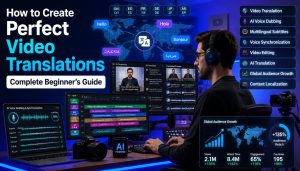
This is why learning how to adapt video content for global markets is becoming so important. You don’t need to start from scratch for every country. With the right strategy and tools like AI dubbing, you can turn one video into many versions that feel local, natural, and easy to understand. Let’s break it down step by step in a simple way.
Why Global Video Adaptation Matters
If you’re targeting only one audience, one language is enough. But when you go global, things change fast.
Here’s why adaptation is important:
- People prefer content in their own language
- Viewers trust content that feels culturally familiar
- Localized videos perform better in engagement
- It increases reach without creating content from scratch
Think of it this way: a message is more powerful when it speaks directly to someone in their own language.
What Does It Mean to Adapt Video Content for Global Markets?
Adapting video content is more than just translating words.
It includes:
- Translating the script
- Adjusting tone and expressions
- Matching cultural references
- Changing visuals if needed
- Adding subtitles or voiceovers
This process is often called global video localization. The goal is simple, make your video feel like it was created specifically for each audience, not just copied and translated.
Common Challenges in Global Video Content
Before jumping into solutions, it’s important to clearly understand the problems most creators and marketers run into when trying to go global. At first, everything may seem simple. You create one video and think it can work everywhere. But once you start targeting different countries, things become more complex.
1. Language Barriers
Not everyone understands the original language of your video. Even if your content is great, viewers may skip it simply because they can’t follow what’s being said. This creates a gap between your message and your audience. And when people don’t understand, they usually don’t stay.
2. High Costs
Traditional dubbing and translation can be expensive, especially when you’re working with multiple languages. Hiring voice actors, translators, and editors for each version adds up quickly. For small teams or individual creators, this can become a major limitation.
3. Time Consumption
Manually recording voiceovers for each language takes a lot of time. You also need to coordinate with voice artists, review recordings, make corrections, and finalize each version. When you multiply this by several languages, the workload increases significantly.
4. Consistency Issues
Keeping the same tone, message, and style across all versions is not easy. Different voice actors may interpret the script differently, which can slightly change how your message feels. Over time, this can affect your brand consistency across regions.
5. Frequent Updates
If your original content changes, maybe you update a product, fix an error, or improve a section. you often need to update every translated version as well. This means repeating the same process again and again, which can slow down your workflow.
The Smart Approach to Video Localization
Instead of creating separate videos from scratch, a smarter method is to build one strong master video and then adapt it.
Here’s the simple workflow:
- Create your original video
- Translate the script
- Localize the message
- Add voiceover or dubbing
- Distribute to different regions
This approach saves time, reduces cost, and keeps your content consistent.
PAS Framework: Understanding the Problem and Solution
Problem
Managing video content for global markets is complicated. You need multiple versions, multiple languages, and constant updates. Doing this manually can feel overwhelming.
Agitation
You spend more time managing versions than creating content. Costs increase. Deadlines get missed. And your message becomes inconsistent across different regions. At some point, scaling becomes difficult.
Solution
The smarter way is to use a structured localization strategy supported by tools like AI dubbing. With AI dubbing, you can quickly convert your original voice into multiple languages while keeping tone and timing natural. This reduces workload and speeds up global distribution.
What is AI Dubbing and Why It Helps
AI dubbing is a technology that automatically generates voiceovers in different languages using artificial intelligence. Instead of hiring voice actors for each language, AI can:
- Clone voices
- Translate speech
- Match tone and emotion
- Sync audio with video
This makes it much easier to produce multilingual video content at scale.
Benefits of AI Dubbing
- Faster production
- Lower costs
- Consistent voice quality
- Easy updates
- Scalable for many languages
For creators and marketers, this means you can reach global audiences without increasing your workload significantly.
AI Dubbing vs Traditional Dubbing
Here’s a simple comparison to understand the difference:
| Feature | Traditional Dubbing | AI Dubbing |
| Cost | High | Low |
| Speed | Slow | Fast |
| Scalability | Limited | High |
| Voice Consistency | Varies | Consistent |
| Setup Effort | Complex | Simple |
| Updates | Time-consuming | Quick |
Step-by-Step: How to Adapt Video Content for Global Markets
Expanding your video content to a global audience isn’t just about translation, it’s about making your content feel native to each viewer. Here’s a practical, step-by-step process you can follow:
Step 1: Start with a Strong Master Video
Everything begins with your original content. Make sure your master video is clear, engaging, and well-structured. Use simple language, avoid heavy slang, and keep your message focused. A strong foundation makes adaptation much easier and more effective across different regions.
Step 2: Identify Target Markets
Decide which countries or regions you want to reach. Consider factors like audience demand, language popularity, and business goals. Prioritizing the right markets ensures you invest time and resources where they will have the most impact.
Step 3: Translate the Script
Translate your script carefully, focusing on meaning rather than word-for-word conversion. A good translation captures tone, intent, and context, not just vocabulary. This helps your message stay powerful and relatable in every language.
Step 4: Localize the Content
Localization goes beyond translation. Adapt cultural references, examples, humor, and even visuals if needed. What works in one country might not resonate or could even confuse in another. The goal is to make the content feel native, not foreign.
Step 5: Use AI Dubbing
Leverage AI dubbing tools to create voiceovers in multiple languages quickly and cost-effectively. Modern AI voices can sound natural and expressive, helping you scale your content without the need for traditional recording setups for every language.
Step 6: Review and Test
Before publishing, review each version carefully. Check pronunciation, tone, timing, and clarity. If possible, get feedback from native speakers to ensure the content feels natural and culturally appropriate.
Step 7: Publish and Optimize
Upload your videos with region-specific titles, descriptions, subtitles, and metadata. Optimize for local search behavior and platforms. This ensures your content is discoverable and performs well in each target market.
Comparison: Manual Localization vs AI-Based Localization
| Aspect | Manual Approach | AI-Based Approach |
| Time Required | High | Low |
| Cost | Expensive | Budget-friendly |
| Effort | Heavy | Minimal |
| Scalability | Difficult | Easy |
| Maintenance | Complex | Simple |
Best Practices for Global Video Localization
To get the best results, keep these tips in mind:
- Always keep your original video simple and clear
- Avoid culture-specific jokes unless localized
- Use subtitles along with dubbing for better clarity
- Maintain consistent branding across all versions
- Test content with native speakers when possible
Small adjustments can make a big difference in how your content is received.
FAQs
What does it mean to adapt video content for global markets?
Adapting video content for global markets means modifying your original video so it resonates with audiences across different countries, languages, and cultures. This includes translating the language, adjusting visuals or references, and ensuring the message feels natural and relatable to each target audience, not just understandable.Why is video localization important?
Video localization is important because audiences are far more likely to engage with content that feels familiar to them. When people see and hear content in their native language and cultural context, it builds trust, improves comprehension, and significantly increases retention and conversion rates.Is translation enough for global videos?
No, translation alone is not enough. While translation converts words from one language to another, localization goes deeper by adapting tone, humor, cultural references, and even visuals. Without localization, your message may feel awkward or lose its intended impact.What is AI dubbing used for?
AI dubbing is used to automatically generate voiceovers in multiple languages using artificial intelligence. It allows creators and businesses to quickly scale their video content globally without needing separate voice actors for each language.Does AI dubbing sound natural?
Yes, modern AI dubbing tools have become highly advanced. They can replicate natural speech patterns, emotions, and accents, making the voiceovers sound very close to human narration often indistinguishable for general audiences.Can beginners use AI dubbing tools?
Absolutely. Most AI dubbing platforms are designed with user-friendly interfaces, allowing even beginners to upload videos, select languages, and generate voiceovers with minimal technical knowledge.How many languages should I target?
You should start with your most important or high-potential markets. Focus on languages where your audience demand is highest, and then gradually expand to additional languages as your content grows and gains traction.Do I still need subtitles if I use dubbing?
Yes, subtitles are still highly recommended. They improve accessibility for hearing-impaired viewers, help people understand accents or unclear audio, and are useful in situations where viewers watch videos without sound.How often should I update localized videos?
Localized videos should be updated whenever the original content changes, or when you identify areas for improvement. Keeping all versions consistent ensures your global audience receives accurate and up-to-date information.What is the biggest benefit of AI dubbing?
The biggest benefit of AI dubbing is scalability. It saves time, reduces production costs, and allows you to quickly distribute your content in multiple languages, helping you reach a much wider global audience without significantly increasing effort.Conclusion
Adapting video content for global markets is no longer optional, it’s essential if you want to grow beyond a single audience. The traditional way of dubbing and translating can slow you down. But with a smart approach and tools like AI dubbing, you can scale faster, reach more people, and maintain consistency across languages.
The key takeaway is simple: don’t rebuild everything from scratch. Build once, then adapt intelligently. If you’re serious about expanding your reach, start by creating one strong video, then explore AI dubbing to transform it into multiple languages. That single step can open doors to entirely new audiences around the world.
Now is the time to think globally and act smart.