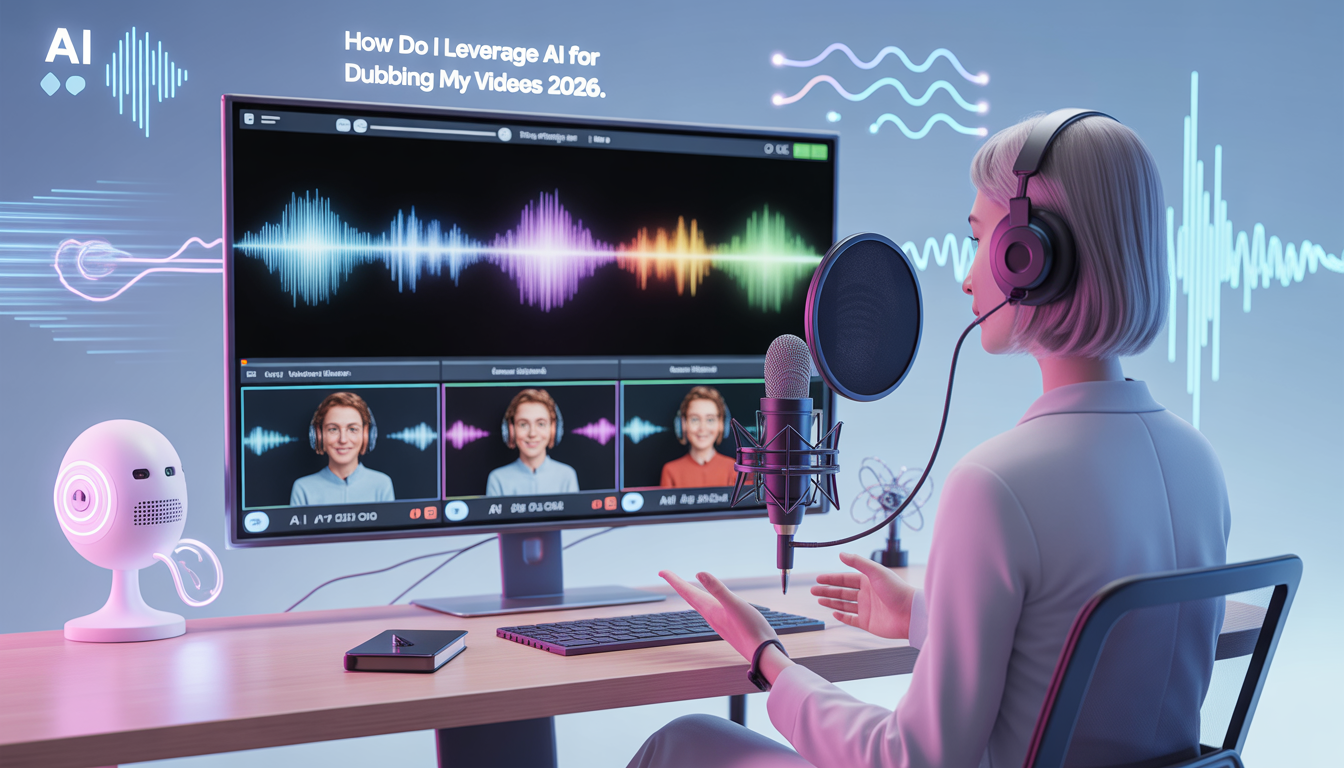
Why Manual Video Dubbing Is Holding You Back
You’ve done the hard part.
You created a great video.
The content is strong.
The visuals are engaging.
The message is clear.
But there’s one problem you can’t ignore anymore:
your audience stops at the language barrier.
Traditional video dubbing makes global growth painfully slow.
Hiring voice actors. Managing scripts. Recording, editing, syncing then repeating the entire process for every new language. It’s expensive, time-consuming, and nearly impossible to scale. For creators, marketers, and educators who need speed and reach, this model simply doesn’t work anymore.
That’s where AI video dubbing changes everything.
Thanks to modern AI dubbing tools, you can now translate, voice, and sync your videos into multiple languages automatically, affordably, and at scale without studios, voice actors, or long production cycles.
In this guide, you’ll learn exactly how to leverage AI for dubbing your videos, step by step and why AI dubbing has become the go-to solution for YouTubers, businesses, and online educators who want to grow globally without friction.
What Is AI Video Dubbing?
AI video dubbing uses advanced artificial intelligence to automatically transform your videos into multiple languages without manual recording or editing.
With AI, you can instantly:
- Translate your video script into dozens of languages
- Generate natural-sounding AI voiceovers that feel human, not robotic
- Automatically sync voices with your video’s timing and pacing
- Add subtitles or captions for accessibility and higher engagement
Instead of spending weeks coordinating voice actors, studios, and edits, AI handles the entire dubbing process in minutes.
The result? Faster production, lower costs, and unlimited scalability.
That’s why video dubbing with AI has become the preferred choice for creators, marketers, educators, and businesses looking to reach a global audience without the global effort.
Step-by-Step: How to Leverage AI for Dubbing Your Videos
Leveraging AI video dubbing isn’t complicated but doing it right makes all the difference. Follow this simple, proven workflow to turn one video into multilingual content that scales globally.
Step 1: Choose the Right AI Dubbing Tool
Not all AI dubbing tools deliver the same quality. The platform you choose will directly impact how natural, professional, and engaging your final video feels.
Look for an AI dubbing solution that offers:
- Human-like AI voices (no robotic tone)
- Multilingual video dubbing with 40+ languages
- Automatic voice-to-video sync for natural timing
- Subtitle and caption generation
- A simple, beginner-friendly interface
Why this matters: A poor tool creates unnatural audio. The right tool makes your content feel native in every language.
Step 2: Upload Your Video or Script
Once you’ve chosen your tool, getting started is effortless.
Most AI dubbing platforms allow you to:
- Upload a finished video, or
- Upload a script or audio file
The AI automatically analyzes timing, speech patterns, pacing, and sentence structure to prepare your content for accurate dubbing, no manual setup required.
Step 3: Select Your Target Languages
This is where multilingual video dubbing unlocks massive growth.
With AI, you can instantly dub the same video into:
- Spanish
- French
- Hindi
- Portuguese
- Arabic
- And dozens of other languages
No re-recording.
No new voice actors.
No added production time.
One video becomes many, ready for a global audience.
Step 4: Generate Natural AI Voiceovers
Now the magic happens.
AI generates natural, expressive voiceovers that match your original tone, pacing, and emotion.
Modern AI voices include:
- Natural pauses and breathing
- Emotional emphasis where it matters
- Clear, native-level pronunciation
The result? Your video sounds human, authentic, and engaging, not artificial.
Step 5: Sync, Review, and Export
Once the dubbing process is complete:
- Review the dubbed version
- Make small adjustments if needed
- Export your fully localized, multilingual video
Your content is now ready for YouTube, social media, e-learning platforms, or marketing campaigns worldwide.
Pro Tip: Start With Your Best-Performing Videos
If you’re new to AI dubbing, begin by localizing:
- Your top YouTube videos
- High-converting ads
- Popular course modules
This delivers faster results and higher ROI with minimal effort.
Why AI Video Dubbing Beats Traditional Dubbing Every Time
Traditional dubbing wasn’t built for today’s creators. It’s slow, expensive, and impossible to scale. AI video dubbing flips the model completely, giving you speed, reach, and control without the overhead.
Save Time and Scale Faster
Traditional dubbing can take days or even weeks per language. AI dubbing takes minutes.
That speed unlocks real growth:
- Faster publishing across multiple languages
- Faster testing of international markets
- Faster growth without extra production cycles
When speed matters, AI wins every time.
Global Reach Without Global Costs
AI dubbing removes the biggest barrier to international expansion: cost.
With AI:
- One video = multiple languages
- One workflow = worldwide distribution
You can reach global audiences without hiring voice actors, studios, or localization teams. The result? Massive reach, minimal spend.
Built to Scale for Any Creator or Business
Whether you’re dubbing:
- 1 YouTube video per week
- 50 e-learning modules
- Entire marketing and training libraries
AI video dubbing scales effortlessly. No bottlenecks. No delays. No complexity. As your content grows, AI grows with you.
Cost-Effective, Predictable, and ROI-Friendly
Traditional dubbing comes with hidden costs:
- Voice actor fees
- Studio time
- Per-language negotiations
AI dubbing removes all of that.
You get:
- Clear, predictable pricing
- No surprise expenses
- Higher ROI on every video you publish
For creators and businesses alike, AI video dubbing is simply the smarter investment.
The Competitive Advantage You Can’t Ignore
While others struggle with slow workflows and high costs, AI-powered creators:
- Publish faster
- Reach more people
- Win global attention first
Popular Use Cases for AI Video Dubbing
AI video dubbing isn’t just a productivity upgrade, it’s a growth accelerator. Here’s how creators and businesses are using it to scale faster and reach global audiences effortlessly:
YouTube & Content Creators
YouTubers leverage AI video dubbing to turn one video into multiple growth engines.
With AI dubbing, creators can:
- Reach international subscribers without creating new content
- Increase watch time by speaking the viewer’s native language
- Grow faster without uploading more videos
One video. Multiple languages. Exponential reach.
Many creators are now seeing global views account for a major share of their channel growth all from the same original content.
E-Learning & Online Courses
Educators and course creators use automatic video dubbing to expand globally without re-recording entire lessons.
AI dubbing helps educators:
- Localize courses for international learners
- Reach students across regions and languages
- Increase enrollments without additional production costs
Instead of rebuilding courses from scratch, AI allows you to scale education instantly and affordably.
Marketing & Advertising
Marketers use video dubbing with AI to create localized campaigns that convert better.
With AI dubbing, marketing teams can:
- Localize ad campaigns for different regions
- Improve engagement and conversion rates
- Speak directly to audiences in their native language
Localized video ads consistently outperform generic, one-language campaigns and AI makes localization effortless.
Social Media Content
Short-form creators use AI dubbing to dominate global feeds.
AI dubbing is perfect for:
- TikTok
- Instagram Reels
- Facebook Videos
- LinkedIn Content
By dubbing short-form videos into multiple languages, creators increase reach, retention, and shares. Localized content consistently outperforms English-only videos across social platforms.
Why This Matters
AI video dubbing turns content into a scalable asset. You’re no longer limited by language, time, or budget.
Create once. Dub globally. Grow everywhere.
PAS Framework: Why AI Video Dubbing Isn’t Optional Anymore
Problem
Your videos are limited to just one language. Every new language requires hours of manual work hiring voice actors, recording, editing, and syncing. It’s slow, expensive, and exhausting, leaving your content trapped in one market.
Agitate
Meanwhile, your competitors are reaching global audiences effortlessly. Every hour you spend on manual dubbing is an opportunity lost:
- Millions of potential viewers never see your content
- International customers slip through your fingers
- Growth and revenue opportunities stagnate
You’re stuck watching others scale while your videos remain stuck in one language.
Solution
Enter AI video dubbing the smarter, faster, and more scalable way to create multilingual content. With AI:
- Fast: Transform one video into multiple languages in minutes
- Affordable: No more expensive voice actors or studio costs
- Scalable: Reach global audiences without extra effort
Imagine creating one video, then instantly sharing it with hundreds of millions of potential viewers worldwide. That’s the power of AI dubbing.
Take action today: Stop limiting your content to one audience. Leverage AI video dubbing, scale globally, and dominate your niche before your competitors catch up.
Traditional Dubbing vs AI Video Dubbing
| Feature | Traditional Dubbing | AI Video Dubbing |
| Cost | High | Affordable |
| Speed | Slow | Minutes |
| Scalability | Limited | Unlimited |
| Language Expansion | Expensive | Instant |
| Workflow | Complex | Simple |
| Best for Creators | ❌ | ✅ |
Best Practices for AI Video Dubbing Success
To get the most out of AI video dubbing, small optimizations can make a huge difference. Follow these best practices to ensure your videos sound natural, engage viewers, and reach global audiences effectively:
1. Keep Scripts Clear and Concise
Long-winded or complicated scripts can confuse AI voices and reduce clarity. Write simple, punchy sentences to make your dubbing sound natural and professional.
2. Choose Natural-Sounding AI Voices
Select AI voices that match your brand tone and feel human. Look for options with emotion, pauses, and natural intonation, not robotic monotone delivery.
3. Review Pronunciation for Brand Terms
AI may mispronounce brand names, technical jargon, or foreign terms. Double-check key words before finalizing to maintain professionalism.
4. Use Subtitles for Accessibility
Even with AI dubbing, adding subtitles improves accessibility, comprehension, and engagement. Multilingual subtitles can also expand your reach and SEO impact.
5. Start With Top-Performing Videos
Maximize ROI by dubbing your best-performing content first. These videos already have proven engagement, so multilingual versions can generate faster results globally.
6. Match Voice Tone to Content Type
For e-learning, use friendly and instructive voices. For marketing, choose energetic and persuasive voices. The right tone improves audience retention and connection.
7. Keep Timing in Mind
Ensure that AI voiceovers align with on-screen actions. Check pauses and pacing to maintain a natural flow and enhance the viewing experience.
8. Test and Iterate
Don’t stop at the first version. Test different voices, languages, and pacing to see what resonates best with your audience. Small tweaks can significantly boost engagement.
Pro Tip: Combining these best practices with the right AI dubbing platform can reduce production time by up to 90% while increasing global reach and engagement.
FAQ: Everything You Need to Know About AI Video Dubbing
Q1: What is AI video dubbing?
AI video dubbing is the process of automatically translating your video content and generating natural AI voiceovers, synced perfectly to your video timeline. It allows creators to produce multilingual content without hiring voice actors or studios.
Q2: Is AI dubbing better than subtitles?
Absolutely. While subtitles are useful, voice dubbing increases engagement, watch time, and accessibility. Viewers feel like the video was made specifically for their language.
Q3: Are AI voices realistic?
Yes. Modern AI voices sound highly human, with proper pacing, intonation, and emotional cues. Your audience won’t feel like they’re listening to a robot.
Q4: Can AI dub YouTube videos?
Definitely. Many creators use AI dubbing to reach international subscribers, expand global viewership, and increase engagement across multiple languages all without re-recording.
Q5: How many languages can AI dubbing support?
Top AI dubbing tools support 40+ languages, including English, Spanish, French, Hindi, Portuguese, Japanese, and more, enabling creators to reach global audiences effortlessly.
Q6: Is AI dubbing expensive?
Not at all. Compared to hiring multiple voice actors, studios, and editors, AI dubbing is cost-effective and predictable, making it ideal for small creators, marketers, and educators.
Q7: Can beginners use AI dubbing tools?
Yes! Most AI dubbing platforms are intuitive and beginner-friendly, requiring no technical expertise. You can upload your video, select the target language, and generate professional results in minutes.
Q8: Does AI dubbing improve video SEO?
Yes. By creating multilingual versions of your content, AI dubbing helps your videos rank in multiple languages, increasing discoverability and organic traffic globally.
Q9: Can AI dubbing be used for ads or marketing videos?
Absolutely. Localized ads tend to convert better than English-only content because viewers feel the message was tailored for them. AI dubbing makes this effortless.
Q10: Is AI dubbing suitable for long videos?
Yes. AI dubbing scales effortlessly, making it perfect for e-learning courses, webinars, tutorials, and full-length marketing videos.
Q11: How accurate is the translation in AI dubbing?
Most modern tools use advanced AI translation models, ensuring translations are contextually accurate. You can also review and tweak scripts for brand-specific terms or tone.
Q12: Can AI dubbing replicate different voices or accents?
Yes. Many platforms offer multiple voice options, accents, and tonal variations, allowing you to match your brand voice or audience preference.
Q13: How fast can AI dub a video?
Depending on the tool, AI can dub a video in minutes, compared to days or weeks for traditional dubbing workflows.
Q14: Will AI dubbing replace voice actors? Not entirely. While AI can handle most content efficiently, professional voice actors may still be preferred for high-end commercials or creative storytelling. However, AI drastically reduces the workload and cost for everyday dubbing.
Start Leveraging AI for Video Dubbing Today
AI video dubbing is no longer just a “nice-to-have.” It’s a game-changing growth multiplier for creators, marketers, and educators.
If you want to:
- Reach global audiences effortlessly
- Save time and reduce costs on traditional dubbing
- Scale your content production without limits
Then leveraging AI for dubbing your videos isn’t just smart, it’s essential.
The creators, educators, and marketers who adopt AI dubbing today will capture global audiences, increase engagement, and stay ahead of the competition tomorrow.
Take action now: Create once, speak every language, and watch your content grow worldwide. Don’t wait, your audience is global, and the future of content creation is here.