What Is Video Translation? (Easy Beginner Guide)
Introduction
Imagine you made a great video, you spent hours planning it, recording it, maybe even editing it perfectly. But only people who understand your language can watch it.
That’s a big problem, right?
Because no matter how good your video is, it can’t grow if people don’t understand it.
Now think about this, what if anyone in the world could understand your video, no matter their language? What if someone in another country could watch your content and get the exact same message, feeling, and value?
That’s exactly what video translation does. It breaks the language barrier and helps your content travel beyond borders. Suddenly, your one video can reach thousands or even millions more people. And the best part, You don’t need to be a tech expert to understand or start using it.
In this guide, I’ll explain everything in a super simple way, no confusing terms, no technical overload. Just clear, practical information that you can actually use.
What Is Video Translation?
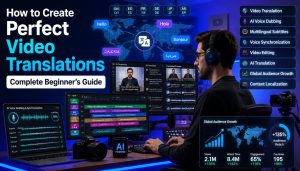
Video translation means converting the spoken or written content of a video into another language so people from different parts of the world can understand it easily. Think of it like this, You create one video, but with translation, it can “speak” many languages. This process doesn’t just change words, it helps keep the meaning, tone, and message the same, even in a different language.
This can include:
- Translating speech (what people say in the video)
- Translating subtitles (text shown on the screen)
- Translating voiceovers (audio narration in another language)
Sometimes, it can also involve adjusting small details like expressions or cultural references so the content feels natural to the new audience. In short, Video translation helps people from different languages understand, enjoy, and connect with the same video without losing its original message.
How Video Translation Works
Let’s break it down step by step so it’s easy to understand:
1. Transcription
First, the video’s audio is converted into text. This means everything spoken in the video is written down word by word. It’s like creating a script from your video.
This step is very important because accurate text = better translation later.
2. Translation
Next, that text is translated into another language. This isn’t just about changing words, it’s about keeping the meaning, tone, and context the same.
For example, jokes, expressions, or cultural phrases may need to be adjusted so they make sense in the new language.
3. Output Creation
Now the translated content is added back into the video. There are a few ways to do this:
- Subtitles: Text appears on screen in the new language
- Voiceovers: A new voice speaks over the original audio
- Dubbing: The original voice is fully replaced with another language
Each method gives a different experience, depending on your audience and budget.
Types of Video Translation
There are different ways to translate a video, and each method gives a slightly different experience to the viewer. Let’s look at the most common types:
1. Subtitles
Subtitles show translated text at the bottom of the video while the original audio keeps playing. This is the simplest and most cost-effective method. Viewers can still hear the original voice, tone, and emotions while reading the translation.
Best for:
- YouTube videos
- Educational content
- Social media clips
It’s quick to create, affordable, and works well for global audiences.
2. Voiceover
In voiceover, a new voice is added in another language, but the original audio is still slightly audible in the background. This helps keep the original feel while making the content easier to understand for new viewers.
Best for:
- Tutorials
- Documentaries
- Business or explainer videos
It feels more natural than subtitles and is easier for people who don’t like reading while watching.
3. Dubbing
Dubbing completely replaces the original voice with a new one in another language.
The new audio is synced with the speaker’s lips and expressions, making it feel like the video was originally made in that language.
Best for:
- Movies
- TV shows
- High-quality content
It gives the best viewing experience, but it is more expensive and takes more time to produce.
Quick Comparison Table
| Method | Cost | Quality Experience | Use Case |
| Subtitles | Low | Good | YouTube, courses |
| Voiceover | Medium | Better | Business videos |
| Dubbing | High | Best | Films, series |
Why Video Translation Is Important
Here’s the real value of video translation and why it matters more than most people think:
- Reach a global audience Your content is no longer limited to one country or language. People from all over the world can watch and understand your videos.
- Grow views and engagement More people watching means more likes, shares, and comments. Your content naturally performs better when it’s accessible to a wider audience.
- Increase revenue opportunities More views can lead to more income whether it’s through ads, clients, or product sales. Translation helps you unlock new markets.
- Connect with more people Language shouldn’t be a barrier. When people understand your message, they feel more connected to you and your content.
If your video is only in one language, you’re missing a huge audience. Think about it, millions of people might be interested in your content, but they scroll past simply because they don’t understand it.
That’s lost potential.
Video translation changes that. It turns your content from local to global, giving it the chance to grow faster and reach the right people, no matter where they are. In simple words: More languages = more people = more growth.
PAS Framework
Problem
Right now, your videos are only understood by people who speak your language. That means your content no matter how valuable or entertaining is only reaching a small group of people.
Agitate
And here’s what that leads to:
- ❌ Fewer views than your content actually deserves
- ❌ Slower channel or business growth
- ❌ Missed chances to go viral or reach new markets
- ❌ Lost opportunities to earn more or build a bigger audience
People from other countries might be searching for exactly what you’ve created but they skip your video simply because they can’t understand it. So even if your content is amazing, it’s stuck in one corner of the world.
You’re basically limiting your own success without even realizing it.
Solution
This is where video translation changes everything. By translating your videos into other languages, you remove that barrier completely.
Now your content can:
- Reach people across different countries
- Be understood by a wider audience
- Grow faster and perform better
Video translation opens your content to the whole world and gives it the reach it truly deserves.
Who Should Use Video Translation?
Video translation isn’t just for big companies or movie studios, it’s useful for almost anyone creating video content.
This is perfect for:
- Creators who want more views If you’re posting on YouTube, TikTok, or any platform, translation helps your videos reach people beyond your local audience. More reach = more growth.
- Businesses targeting global customers If you sell products or services, video translation helps you connect with customers in different countries and increase your chances of making sales.
- Educators sharing knowledge Teachers, course creators, and trainers can help more people learn by making their content understandable in multiple languages.
- Marketers expanding reach Marketing videos perform much better when they speak the audience’s language. Translation helps campaigns work in different regions.
Best Tools for Video Translation
There are many tools available for video translation but choosing the right one can make a huge difference in quality, speed, and results.
Here are some popular options:
- AI subtitle generators These tools automatically create subtitles and translate them into different languages. They’re fast and easy to use, especially for beginners.
- Online translation tools These help translate scripts or subtitles quickly. However, they may need manual editing to ensure accuracy and natural flow.
- Professional dubbing services These offer high-quality voiceovers and dubbing with real human voices. They provide the best experience but can be expensive and time-consuming.
If you’re looking for a smarter and more balanced solution, Dubright is designed to combine speed, quality, and ease of use, all in one place.
With Dubright, you can:
- Generate accurate subtitles quickly
- Translate videos into multiple languages
- Create natural-sounding voiceovers
- Save time without sacrificing quality
It’s built for creators, marketers, and businesses who want to scale their content globally without the usual complexity.
Automatic vs Manual Tools
- Automatic tools (like AI platforms)
- Fast
- Easy to use
- Great for quick scaling
- Manual or professional services
- Higher accuracy
- Better cultural adaptation
- Slower and more expensive
Dubright gives you the best of both worlds automation for speed and smart processing for better quality.
FAQ
1. What is video translation in simple words?
It means converting a video’s spoken or written content into another language so more people can understand it. This includes subtitles, voiceovers, or dubbing.2. Is video translation expensive?
It depends on the method you choose.Subtitles are usually cheap or even free, while dubbing and professional voiceovers can cost more because they require extra work and quality control.
3. Which is better: subtitles or dubbing?
Both have their own benefits.Subtitles are affordable and widely used, while dubbing gives a more natural and immersive viewing experience. The best choice depends on your audience and budget.
4. Can AI translate videos?
Yes, AI tools can translate videos very quickly and automatically generate subtitles or voiceovers. However, they may need a little human editing to make sure everything sounds natural and accurate.5. Do YouTubers use video translation?
Yes, many YouTubers use subtitles or dubbing to reach international audiences. It helps them grow faster, get more views, and connect with people from different countries.6. How long does video translation take?
It depends on the video length and the method used.Simple subtitle generation can take minutes, while full dubbing or manual translation may take hours or even days.
7. Is video translation good for SEO?
Yes, it is very helpful for SEO. Translated videos can rank in different regions and attract a wider audience, which increases visibility, watch time, and engagement.8. What languages should I translate into?
It’s best to start with widely spoken languages like English, Spanish, Arabic, or the language of your target audience. This helps you reach more viewers quickly.9. Can I translate videos for free?
Yes, some tools offer free AI subtitle generation and basic translation features. However, advanced features like dubbing or high-quality editing may require paid tools.10. Does translation affect video quality?
No, if done properly, it actually improves the viewing experience. Good translation makes your content more accessible, clear, and enjoyable for a global audience.Conclusion
Video translation is no longer optional, i’s a smart move if you want to grow.
It helps you:
- Reach more people
- Increase engagement
- Build a global audience
If you’re creating videos, start small. Add subtitles first. Then scale up.
Your content deserves to be understood by the world.